
When an aging parent or spouse requires residential assisted living or specialized memory care, the family home is almost always the single largest financial asset available to fund that care. The most urgent dilemma adult children and family trustees face is whether to sell the property on the open market or keep it as a rental property hoping monthly tenant income will cover the facility's rent. Across Central Orange County communities like Orange, Villa Park, Tustin, and Santa Ana, financial reality is uncompromising: keeping the home as a rental almost always creates an unsustainable monthly cash deficit. However, selling successfully requires coordinating the timing of the move with federal capital gains concessions, California property tax rules, and legal signing authority.
Care Funding Fast-Track: Central Orange County residential assisted living averages $5,800 to $7,500 per month, while memory care runs $8,500 to $10,500+ per month. Average single-family rental income ($3,200 to $4,500/mo) leaves a monthly out-of-pocket deficit of $2,500 to $6,000 after property management, taxes, and maintenance. Crucially, under Internal Revenue Code § 121(d)(7), a homeowner who enters a state-licensed care facility can still claim the full $250,000 (single) or $500,000 (married) capital gains tax exclusion if they lived in the home for just 1 of the 5 years prior to entering care.
Written by Diego Magdaleno, REALTOR® (CA DRE #01952035), Diego & Nauz | 1Vision Real Estate · Reviewed by Nauz Magdaleno, J.D. · Updated November 2026
Fiduciary financial and real estate guidance analyzing senior housing cost stacks, IRC § 121(d)(7) tax exclusions, and living trust authority across Orange County.
Weighing Renting vs. Selling to Pay for Care?
Consult directly with Diego Magdaleno to calculate your property's net equity runway, compare care costs against rental cash flow, and audit trustee signing authority.

1. Should You Sell the Family Home or Keep It to Pay for Assisted Living?
For the vast majority of Orange County families, selling the property is the mathematically superior and lower-stress path. Net rental income from a single residential property in Central OC rarely covers even 50% of monthly memory care fees, leaving families to drain liquid savings to cover the difference every month.
Furthermore, retaining the home forces adult children into the demanding role of property managers during an acute family medical crisis. California tenant protection laws (including the Tenant Protection Act of 2019 / AB 1482) severely restrict terminating tenancies, meaning if care needs escalate and you need to liquidate the property quickly, you may be trapped with an occupied rental that takes months and substantial cash buyouts to vacate.
Keeping the property only makes financial sense if:
- The parent possesses substantial pensions, liquid investments, or long-term care insurance policies that fully cover the monthly care facility fees without relying on the house.
- A family member intends to move into the residence as their primary home and qualifies to preserve the parent's low Proposition 13 property tax base under California Proposition 19. Review our Prop 19 reassessment rules for heirs.
If you are beginning an estate evaluation, read our comprehensive overview in the master guide to selling a parent's home in Orange County.
2. What Assisted Living & Memory Care Actually Cost in Central Orange County
Online national directories routinely advertise average assisted living rates of $4,500 to $5,200 per month. In Central and North Orange County, these figures are outdated or reflect inland suburban shared rooms. Real-world private-pay community rate sheets reflect significantly higher base costs:
| Care & Housing Service Category | Typical Central Orange County Cost | Statutory & Operational Notes |
|---|---|---|
| Assisted Living (Base Private Studio/1BR) | $5,800 to $7,500 / month | Includes lodging, 3 daily meals, housekeeping, laundry, and 24-hr emergency response. |
| Memory Care (Secured Dementia Unit) | $8,500 to $10,500+ / month | Secured perimeter, specialized cognitive programming, medication management, and high staffing ratios. |
| Tiered Care-Level Add-Ons | $500 to $2,500+ / month | Billed on points: incontinence supplies, 2-person mechanical transfers, and diabetic care. |
| One-Time Community Admission Fee | $4,500 to $8,500 (one-time) | Non-refundable intake assessment fee due prior to physical move-in. |
| In-Home Caregiver (44 hrs/week @ $40/hr) | $6,900 to $7,600 / month | Daytime only; does not cover property taxes, utilities, home repairs, or food. |
Two California RCFE Statutes Every Family Must Know:
- The 90-Day General Rate Increase Rule: Under California Health & Safety Code § 1569.655 (amended by SB 1406), a licensed Residential Care Facility for the Elderly (RCFE) must provide at least 90 days of advance written notice before increasing its general monthly base rate, including an explanation of the added operating costs.
- The 2-Day Level-of-Care Assessment Rule: The 90-day rule does not apply to care-tier increases. If a senior's clinical assessment reveals greater physical assistance needs (such as two-person transfers or night wandering), the facility can increase care fees within two business days. Families must budget for monthly care fees to climb over time.
Compare long-term cost differences in our guide on assisted living vs. aging in place across Orange County.
3. The Rental Fallacy: Why Keeping the House Leaves a $2,500–$6,000 Monthly Deficit
The belief that renting the family home can cover senior care costs breaks down as soon as net operating income is calculated:
- Gross Rental Income: An un-renovated 1960s–1970s single-family ranch in Orange or Tustin rents for approximately $3,500 to $4,500 per month.
- Mandatory Rental Operating Deductions:
- Professional property management fee (8% to 10%): ~$350/month
- Landlord hazard and liability insurance: ~$175/month
- Ongoing property taxes (Prop 13 base): ~$250–$500/month
- Maintenance reserves and tenant turnover repairs: ~$300/month
- Net Operating Cash Flow: Leaves only $2,425 to $3,175 per month in spendable cash.
When compared against an assisted living bill of $6,800/month or a memory care bill of $9,200/month, the family faces a net cash deficit of $3,600 to $6,000 every single month. Within two years, that ongoing shortfall burns through $86,000 to $144,000 of family savings.
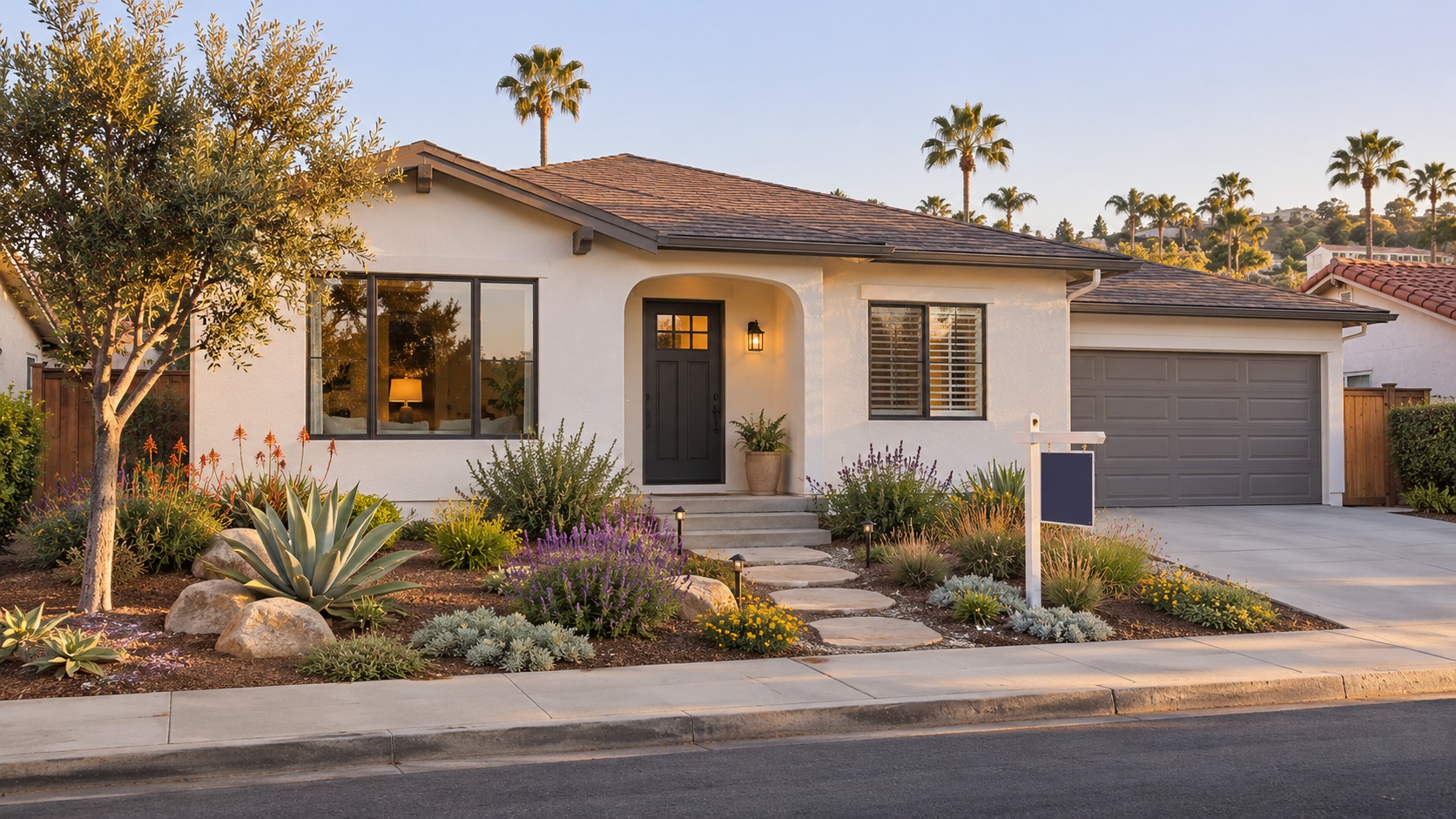
4. Financial Runway Model: Rent & Bleed vs. Sell & Fund 14+ Years of Care
Compare how keeping the home as a rental stacks up against an open-market sale based on a typical $1,350,000 Central Orange County property:
• Monthly Memory Care Facility Obligation: $8,500 / month ($102,000 / year)
PATH A: Retain as Rental Property
• Gross Rental Income: $3,800 / month
• Net Cash Flow after Management, Tax, Insurance & Reserves: +$2,750 / month
• Net Monthly Facility Shortfall: $8,500 − $2,750 = −$5,750 / month DEFICIT
• Annual Family Cash Drain: −$69,000 / year
• Result: Family exhausts liquid retirement reserves within 18 to 24 months, forcing an emergency distressed sale later.
PATH B: Execute Fiduciary Open-Market Sale
• Gross Sale Price: $1,350,000
• Estimated Net Cash Proceeds (after standard fees & prep): $1,260,000
• Conservative Yield on Capital (Treasury/Money Market @ 4.25%): $53,550 / year ($4,462 / month)
• Net Monthly Draw Required: $8,500 − $4,462 = $4,038 / month
• Total Private-Pay Care Runway: Over 14.5 YEARS of fully funded memory care
• Result: Zero landlord liabilities, zero sibling repair disputes, and guaranteed clinical care security.
5. Tax Relief: The IRC § 121(d)(7) Nursing Home Capital Gains Exception & Prop 19
Two distinct tax codes dictate what an Orange County family keeps when liquidating a home during a care transition:
The Internal Revenue Code § 121(d)(7) Exception
Standard federal tax law requires a homeowner to own and occupy a residence for at least 2 of the 5 years preceding a sale to claim the $250,000 (single) or $500,000 (married) Section 121 capital gains exclusion.
However, under IRC § 121(d)(7), Congress created a specialized exception for individuals who become physically or mentally incapable of self-care:
- If the parent lived in the home for at least 1 full year during the 5-year lookback period before entering care, all time spent residing in a state-licensed facility (including assisted living, board-and-care, or skilled nursing) counts as time living in the home.
- The Practical Takeaway: A parent who has resided in an assisted living facility for 2 or 3 years can still claim the full $250,000 or $500,000 exclusion. Families do not need to rush into a panic sale on day one out of fear that their capital gains exclusion will expire.
Why Proposition 19 Does NOT Apply to Assisted Living
California Proposition 19 allows homeowners aged 55+ to transfer their low Proposition 13 base year property tax value to a replacement residence. However, moving into assisted living or memory care does NOT qualify for a Prop 19 tax base transfer because assisted living is rental-based residential lodging, not a purchased replacement property. Review our complete Orange County senior Prop 19 guide.
Need Boots on the Ground While Coordinating Care?
You do not have to manage contractor estimates, cleanout crews, and estate sales while helping your parent settle into assisted living. 1Vision manages the entire real estate project locally across Orange, Villa Park, and North Tustin.
6. Who Has the Legal Authority to Sell? (Living Trust vs. Power of Attorney)
Before signing listing agreements or opening escrow, adult children must verify their legal standing to convey title under California real estate law:
- Trust-Titled Property (The Rule): If the property's recorded deed is held in a Revocable Living Trust, a Power of Attorney cannot sell the property. Title underwriters require the currently serving Trustee or designated Successor Trustee to execute all conveyance documents using a California Certification of Trust under California Probate Code § 18100.5.
- Activating Successor Authority (The 2-Physician Rule): If the parent is still living but suffers from dementia or stroke, activating the Successor Trustee's signing powers typically requires securing formal written capacity declarations from two licensed California physicians pursuant to the terms of the trust. Under California law, a medical diagnosis alone does not establish legal incapacity; capacity depends on whether the parent can understand the transaction at the time of signing.
- Durable Power of Attorney (Individual Property): If the property remains titled in the parent's individual name, an adult child can sign under a DPOA only if the document contains explicit statutory authority to convey real property. Remember that all Power of Attorney authority expires instantly upon death. Review our legal guide on Power of Attorney rules for real estate sales.

7. Four Critical Hazards That Derail Senior Home Sales Mid-Escrow
Senior property liquidations encounter four unique micro-market bottlenecks across Orange County:
- Wildfire Insurance in Foothill Zones: In Orange Park Acres, Santiago Hills, and custom foothill tracts in North Tustin, admitted carriers have largely stopped writing new hazard policies. Buyers must secure a high-risk California FAIR Plan policy paired with a Difference in Conditions (DIC) policy ($6,000 to $14,000/year). Underwriting backlogs at the FAIR Plan take 30 to 45 business days to bind. Obtaining an insurance quote prior to listing prevents cancelled escrows.
- Unpermitted Historical Modifications: Homes owned for 30 to 50 years often feature unpermitted enclosed patios, garage conversions, or non-period window replacements. In historic districts like Old Towne Orange and Floral Park, unpermitted work can trigger municipal code enforcement citations and stop-work orders. Follow our protocol in clearing unpermitted work and title clouds.
- Unfunded Living Trusts (The Heggstad Trap): If parents created a living trust but neglected to record a grant deed transferring the residence into the trust's name, title insurers will reject trustee signatures. The estate must file a Heggstad Petition (California Probate Code § 850) with the Orange County Superior Court Probate Division, delaying closing by 3 to 6 months. Review our Orange County probate real estate guide.
- Unstable Initial Care Placements: If an assisted living community cannot manage a resident's escalating dementia behaviors or medical needs, it can issue a 30-day discharge notice. Experiencing a placement failure mid-escrow creates severe emotional chaos. An honest pre-admission clinical assessment prevents premature discharge.
8. Week-by-Week Transition Timeline: Care Placement to Closing Escrow
Across Central Orange County, coordinating care placement and an open-market home sale averages four to five months total:
| Transition Phase | Best Case | Typical Schedule | Potential Bottlenecks |
|---|---|---|---|
| 1. Care Assessment & Placement | 7 Days | 21 Days | Touring communities, medical evaluations, community fee deposit. |
| 2. Legal Authority & Title Audit | 2 Days | 14 Days | Obtaining 2 physician capacity declarations; checking deed recording. |
| 3. Downsizing & Estate Sorting | 5 Days | 14 Days | Partnering with Senior Move Managers for room-by-room clearouts. |
| 4. High-ROI Cosmetic Prep | 7 Days | 21 Days | Interior paint, LVP flooring, landscape clean-up, professional staging. |
| 5. Active Marketing on MLS | 8 Days | 24 Days | Generating competing retail offers from owner-occupant buyers. |
| 6. Escrow to Final Distribution | 15 Days | 30 Days | Buyer loan underwriting, FAIR Plan binding, wire disbursement. |
Follow our operational schedule in the caregiver timeline for selling a parent's home.
9. Eldercare Bridge Loans: How to Pay for Care Before the House Sells
Care facility entrance fees ($4,500–$8,500) and initial monthly rent cannot wait for a 90-day escrow to close. To prevent families from panic-selling to wholesale investors at a $100,000 to $200,000 equity discount, specialized financial bridge mechanisms are available:
- Dedicated Senior Eldercare Bridge Loans: Financial lines of credit ($15,000 to $250,000+) designed specifically to cover assisted living entrance fees and care rent for 6 to 12 months. Interest-only payments are deferred and repaid directly from escrow closing proceeds.
- Home Equity Lines of Credit (HELOC): If the parent still retains legal capacity, securing a HELOC before listing provides low-interest liquidity.
- Brokerage Concierge Preparation: Our team coordinates pre-sale cosmetic updates (paint, flooring, staging, and cleanout) with zero upfront out-of-pocket costs, repaid seamlessly through escrow. Compare net proceeds in our analysis on renovating vs. selling a parent's home as-is.

10. California Medi-Cal Asset Limits & Long-Term Care Recovery Rules
While a parent resides in their primary home, the residence is generally classified as an exempt asset for California Medi-Cal eligibility. However, once the property is sold, the net cash proceeds become countable liquid assets.
Under California's reinstated Medi-Cal long-term care asset rules:
- Countable assets are limited to $130,000 for an individual and $195,000 for a married couple. Generating $1,200,000 in liquid home sale proceeds immediately terminates Medi-Cal coverage until a private-pay spend-down plan is executed.
- The Transfer Penalty Warning: Attempting to gift the home to adult children or sell it far below fair market value triggers Medi-Cal lookback transfer penalties, delaying eligibility for skilled nursing coverage.
- Medi-Cal Estate Recovery: If a parent received Medi-Cal long-term care benefits after age 55, the Department of Health Care Services (DHCS) will file a creditor recovery claim against their estate after death. Satisfying these liens requires coordination with an elder law attorney prior to escrow closing.
11. Frequently Asked Questions
Should you sell the family home or keep it as a rental to pay for assisted living in Orange County?
In most Orange County situations, selling is the financially superior choice because median single-family rents ($3,200 to $4,500/month) leave a monthly deficit of $2,500 to $6,000 after property management, taxes, and maintenance when compared against assisted living ($5,800–$7,500/mo) and memory care ($8,500–$10,500/mo).
Can a parent keep their federal capital gains exclusion after moving into assisted living?
Yes. Under Internal Revenue Code § 121(d)(7), a homeowner who becomes physically or mentally incapable of self-care can claim the full $250,000 (single) or $500,000 (married) exclusion if they resided in the home for at least 1 of the 5 years prior to entering a state-licensed care facility.
Does California Proposition 19 apply to senior assisted living?
No. Proposition 19 tax base portability applies exclusively to purchasing or constructing a replacement primary residence; leasing an apartment in an assisted living or memory care facility does not qualify for a Prop 19 base year value transfer.
How much advance notice must an assisted living facility in California give before raising rates?
Under California Health & Safety Code § 1569.655 (amended by SB 1406), residential care facilities must provide at least 90 days of advance written notice before implementing a general base-rate increase, while rate increases tied to care-tier assessment changes require written notice within two business days.
Can a Power of Attorney sell a home titled in a living trust?
No. If the property's deed is held in a Revocable Living Trust, a Power of Attorney cannot convey title; California title insurance companies strictly require the currently serving Trustee or Successor Trustee to execute all conveyance documents under California Probate Code § 18100.5.
How can families cover care entrance fees before the house sells?
Families can bridge the gap using short-term eldercare bridge loans (which provide lines of credit deferred and repaid from closing escrow proceeds), home equity lines of credit (HELOCs), or brokerage pre-sale concierge funding that covers repairs with zero upfront cash.
Plan Your Senior Care Property Transition With Trusted Specialists
Diego Magdaleno has successfully guided over 460 families and trustees through complex property liquidations across Central Orange County since 2012. Supported by Nauz Magdaleno, JD, the 1Vision team coordinates legal audits, estate liquidators, and pre-sale preparation in Orange, Villa Park, North Tustin, and Santa Ana.
Diego Magdaleno · CA DRE# 01952035 | 1Vision Real Estate · CA DRE# 02051216
Headquarters: 625 The City Drive S, Suite 400, Orange, CA 92868
Book a Confidential Care Transition Strategy Call with Diego
Select a convenient date and time to review your family's care budget, calculate property net equity, and structure a low-stress transition timeline.