
If you've been named executor of a parent's estate in Orange County, the real estate question usually isn't "should I sell" - it's "how fast can I get legal authority to sell." I've walked enough families through Orange County Superior Court's probate process to tell you the honest answer: it depends almost entirely on one filing decision made early on. Get it right, and you can list and close without ever setting foot in a courtroom. Get it wrong, and you're looking at a public auction with a 10% cash deposit requirement. This guide walks through that decision, alongside the timeline, costs, and local failure points I see most often in trust and probate sales across Old Towne Orange, Villa Park, and North Tustin. Before listing, review our successor trustee and executor checklist. For the broader family and financial picture, I've also put together a trust property sale in OC overview that ties this process to tax basis and Prop 19.
Do You Even Need Probate Court?
Direct Answer: Only if the home wasn't properly funded into a trust. If your parent recorded a grant deed transferring the property into a revocable living trust, a successor trustee can typically sell within 7–14 days without court involvement. If the home was still in the parent's individual name, you're headed to probate.
This is where I see families lose weeks. A signed trust document doesn't move real estate on its own - the deed has to be recorded. I've had clients assume their parent "had a trust" and discover, via a title search at the Orange County Clerk-Recorder, that the house itself was never actually transferred in. When that happens, a Probate Code § 850 (Heggstad) petition can sometimes confirm trust ownership without a full 12-month probate, but it still requires a court filing. If a Power of Attorney was in place, know that it ends the moment a parent passes - authority shifts entirely to whoever the will or trust names as executor or trustee.
Full Authority vs. Limited Authority: The Decision That Changes Everything
Direct Answer: Full IAEA Authority lets you sell without a court confirmation hearing, as long as no beneficiary formally objects. Limited Authority forces every sale through a public court auction at the Costa Mesa Justice Complex, adding 60–90 days and a mandatory 10% buyer deposit.
- Full Authority: You market and sell the home like a standard listing. Once you have an accepted offer, you serve Judicial Council Form DE-165 (Notice of Proposed Action) to every beneficiary, who then have 15 calendar days to object. No objection, no court hearing - you open escrow and close.
- Limited Authority: The property must list at a price that nets at least 90% of the Probate Referee's appraised value, and any accepted offer still goes to a court confirmation hearing where overbidders can show up with a cashier's check and outbid your buyer in open court.
If siblings distrust the personal representative, forcing Limited Authority does buy judicial oversight - but it comes at a real cost in time and certainty. For an out-of-state executor especially, Full Authority is usually worth requesting explicitly when the petition for probate is filed, so you're not flying back for a courthouse auction.
The Costa Mesa Timeline, Realistically
Direct Answer: Expect 90–120 days from initial filing to receiving Letters of Administration, and 9–14 months total from filing to final cash distribution. Uncleared Probate Notes are the single biggest cause of delay.
Every probate matter in Orange County - filings, examiner note reviews, and confirmation hearings - runs through the Costa Mesa Justice Complex at 3300 Harbor Blvd, not the Santa Ana courthouse, which is a common source of confusion. Court examiners post "Probate Notes" online three to four weeks before your hearing, flagging any procedural gaps. Miss the window to clear them - generally four court days before the hearing - and the judge will continue the matter six to twelve weeks out. Once Letters issue, a court-appointed Probate Referee has up to four months to complete the date-of-death appraisal on Form DE-160, which also sets your stepped-up cost basis for capital gains purposes. More on that in how step-up in basis actually works.
What Probate Actually Costs in Orange County
Direct Answer: On a $1,000,000 estate, statutory attorney and executor fees alone total roughly $42,300, plus a $435 filing fee, publication costs, and a Probate Referee fee near $1,000.
California Probate Code sets statutory compensation on a sliding scale - 4% on the first $100,000, 3% on the next $100,000, 2% on the remainder up to $800,000 - and it applies identically to both the attorney and the personal representative. That's before holding costs. A vacant Old Towne Orange craftsman still needs insurance, and standard homeowner policies typically lapse coverage after 30–60 days of vacancy, so budgeting $250–$600 a month for a vacant-home endorsement is realistic, plus utilities to keep the property from drawing a municipal code citation. If you are deciding whether repairs are worth the investment prior to court appraisal, review our as-is sale vs pre-sale rehab analysis.
Where Prop 19 Fits Into the Decision
Direct Answer: If an heir moves in as a primary residence within 12 months, Orange County can carry forward the parent's lower assessed value up to a capped limit. If the home is sold to a third party instead, the estate gets a full step-up in basis to fair market value - often the more tax-efficient path for heirs who won't occupy it.
For transfers between February 16, 2025 and February 15, 2027, the California State Board of Equalization caps this intergenerational exclusion at the factored base year value plus $1,044,586, and the heir must file the Homeowners' Exemption within 12 months to lock it in. This is general information, not tax or legal advice - Prop 19 eligibility and the exact reassessment math depend on your family's specific numbers, and I'd always recommend confirming the details with the Orange County Assessor's Office or your CPA before deciding whether to hold or sell. I go deeper on the base-year math in California Prop 19 reassessment rules for heirs.
One more figure worth flagging early rather than late: if a parent received Medi-Cal benefits, the state's Estate Recovery program can file a claim against the estate that becomes a lien on the property, which needs to be resolved before proceeds reach beneficiaries - again, something to confirm with an elder law attorney rather than assume either way.

Where These Sales Fall Apart
Direct Answer: The two most common failure points are a beneficiary objection to the Notice of Proposed Action, and undisclosed unpermitted alterations in historic Old Towne Orange properties.
If any heir files a written objection within that 15-day NOPA window, Full Authority is revoked for that sale and it drops into the same court-confirmation process as Limited Authority - which is exactly the delay everyone was trying to avoid. Separately, homes in the Old Towne Orange Historic District often carry decades-old unpermitted work - a converted garage, swapped-out original windows - that the City of Orange Design Review Committee will flag during escrow, sometimes requiring period-accurate materials to resolve. I've covered how to get ahead of that specific issue in resolving unpermitted work and title clouds, and if the home itself is a designated historic property, selling an inherited historic home in Oldtowne Orange walks through the disclosure side in more detail.
If you're managing this from out of state, the out-of-state executor management guide covers how to run the filing, listing, and closing remotely under Full IAEA authority. And if the estate itself is already in a trust rather than probate, selling a home held in a living trust in Orange, CA is the more direct path - worth checking before you assume probate is required at all. For a fuller checklist of everything a trustee or executor is responsible for start to finish, see the complete trustee and executor checklist.
Frequently Asked Questions
Can an executor sell a house in probate without full court approval in Orange County?
Yes, if the executor is granted Full Authority under the Independent Administration of Estates Act. Full Authority allows the personal representative to market, accept an offer on, and close the sale of real estate without a public court auction, as long as the required 15-day Notice of Proposed Action period passes without a beneficiary objection.
Where are probate real estate confirmation hearings held in Orange County?
All Orange County probate matters, including real estate confirmation hearings and court overbid auctions, are held at the Costa Mesa Justice Complex, 3300 Harbor Blvd, Costa Mesa, CA 92626 - not at the Santa Ana courthouse, which is a common point of confusion for first-time executors.
What does an attorney and executor get paid to sell a probate home in Orange County?
California sets identical statutory fee scales for both the estate attorney and the personal representative: 4% on the first $100,000 of estate value, 3% on the next $100,000, and 2% on the next $800,000. On a $1,000,000 estate, that works out to roughly $21,150 for the attorney and $21,150 for the executor.
Real Results
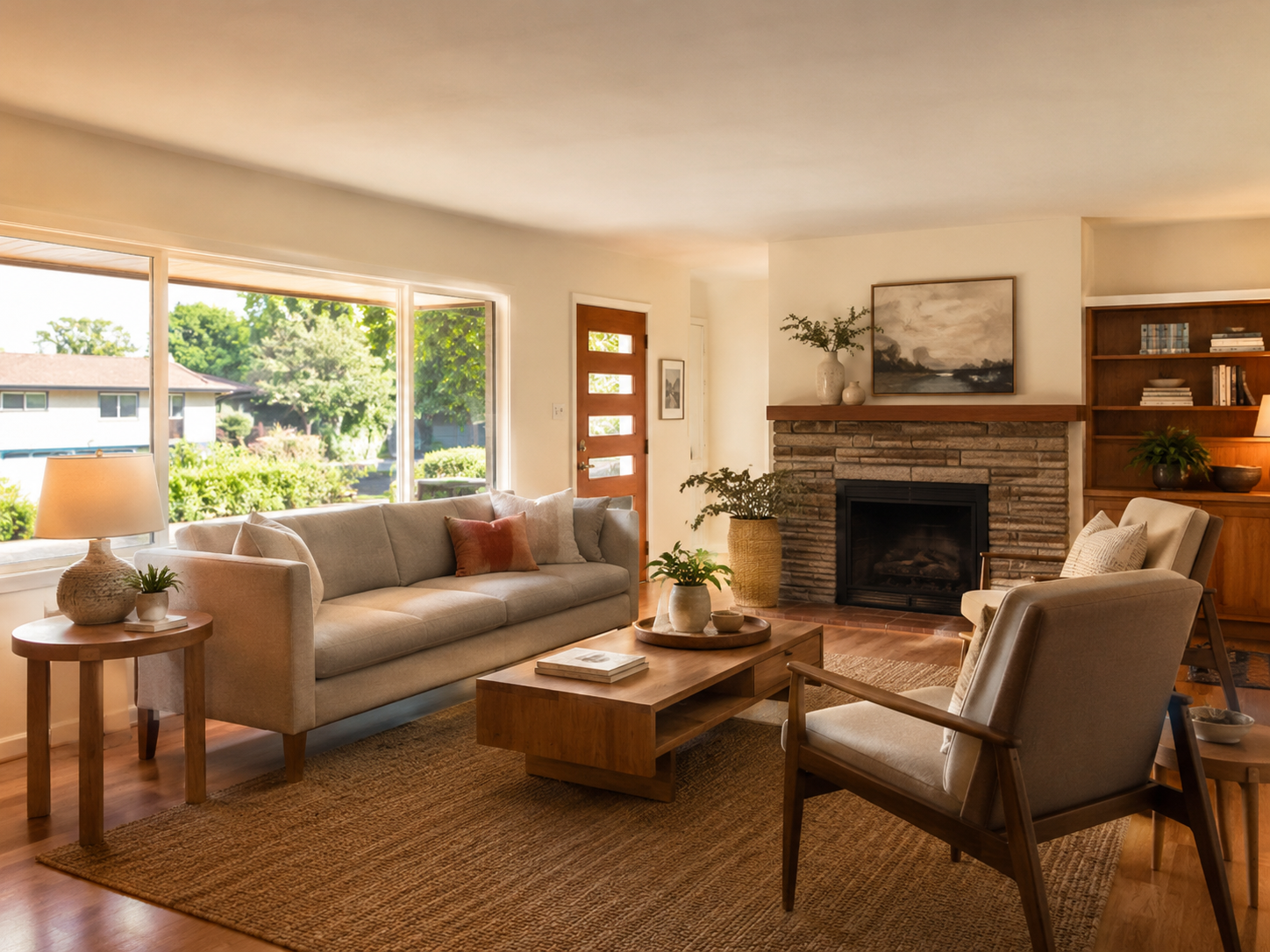
One of the more complicated Oldtowne Orange sales I worked came down to exactly this kind of authority question. At 168 N Center St, a character home that ultimately sold for $1.32M, sorting out Full IAEA authority early in the probate filing meant the family avoided a court confirmation hearing entirely and kept the sale on a normal escrow timeline instead of a 60–90 day court delay.
If you're staring down a probate filing and trying to figure out whether you're headed for a straightforward sale or a courthouse auction, I'm happy to walk through what your specific title status and family situation actually require. Learn more about Diego Nauz Magdaleno or reach out anytime at (714) 681-1222 or diego@1visionre.com - I'd rather help you sort this out before the petition is filed than after.