
I get some version of this question every few months: "Is it too early to downsize? Should I wait?" There's no single right answer, but there is a wrong way to think about it — waiting for a health event to force the decision. Our Orange County seniors' Prop 19 guide is where I keep the full picture of tax rules, timing, and local housing stock, but this post is about one thing: how age 55, 65, and 75 actually change your options.
Why 55, 65, and 75 Aren't the Same Decision
A move at 55 is a lifestyle choice with full control over timing and terms. A move at 75, made after a fall or a hospital stay, is usually a scramble with fewer options and less leverage. The physical demands of sorting, packing, and relocating only get harder with age, not easier — so the "wait and see" instinct often works against you financially and physically.
- 55–64: Proactive window. Full mobility, time to shop for the right replacement home, and the ability to optimize a Prop 19 tax base transfer without deadline pressure.
- 65–74: Still workable, but I start seeing more homes where deferred maintenance and unpermitted work have piled up, which slows escrow.
- 75+: Moves at this stage are frequently reactive — triggered by a medical event — which limits housing choices and compresses timelines. Reviewing assisted living vs. aging in place considerations covers how that decision point affects a sale timeline in more detail.
What Prop 19 Actually Changes When You Downsize
Homeowners 55 and older can carry their existing property tax base to a replacement home anywhere in California, even one worth more than their current home. This is one of the most misunderstood rules I run into with sellers here in Orange.
The common assumption is that your replacement home has to cost the same or less. It doesn't. If you buy up, the difference in market value is added to your transferred base — you still come out ahead of a full reassessment. The replacement purchase has to happen within two years of your sale, and the claim gets filed with the Orange County Assessor on Form BOE-19-B. Miss that window and the base-transfer benefit is gone for good. Reviewing Prop 19 reassessment rules and mechanics walks through that framework in full.
Here's a simplified look at what that transfer is worth in practice:
| Scenario | Standard Reassessment | Prop 19 Base Transfer |
|---|---|---|
| New assessed tax base | Full replacement purchase price | Original base + value difference only |
| Rough annual property tax at ~1.1% | Calculated on full new value | Calculated on the lower transferred base |
This estimate is for general informational purposes only and is not tax, legal, or CPA advice. Actual Prop 19 tax base transfer eligibility and savings depend on your specific circumstances and must be confirmed with the Orange County Assessor's Office or your CPA before making any decisions.
Our breakdown of the most common Prop 19 base transfer mistakes covers the errors I see most often, particularly around that two-year clock.
Old Towne Orange vs. the Ranch Tracts: The Foundation Problem Nobody Mentions
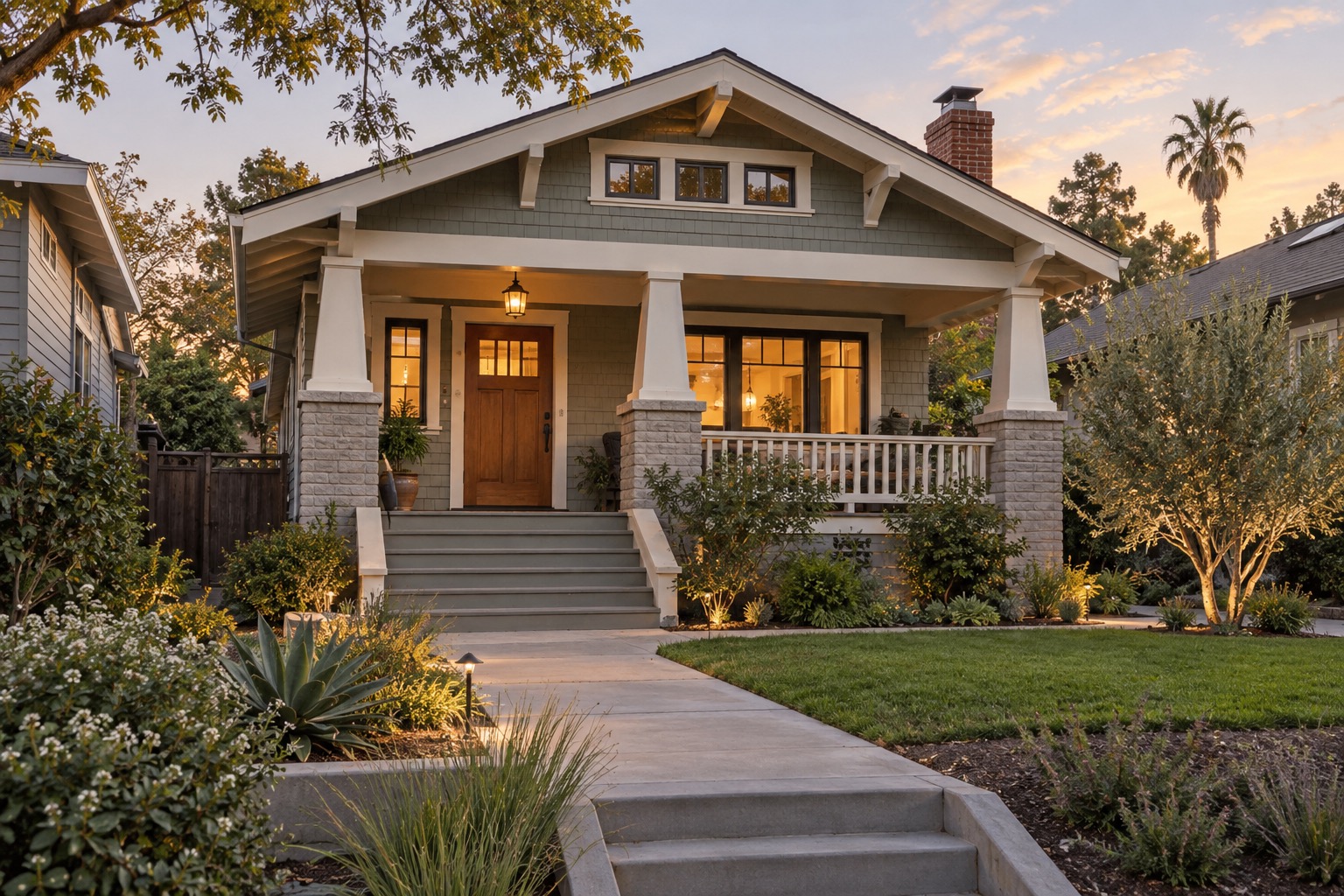
If you're in a craftsman bungalow or Spanish Colonial in Old Towne Orange, retrofitting for aging-in-place is usually harder — and pricier — than people expect. Most of these homes were built between the 1890s and 1940s on raised wood-frame foundations, with exterior entry steps and narrow hallways. Historic preservation guidelines limit how much you can alter without running into cost-prohibitive structural work.
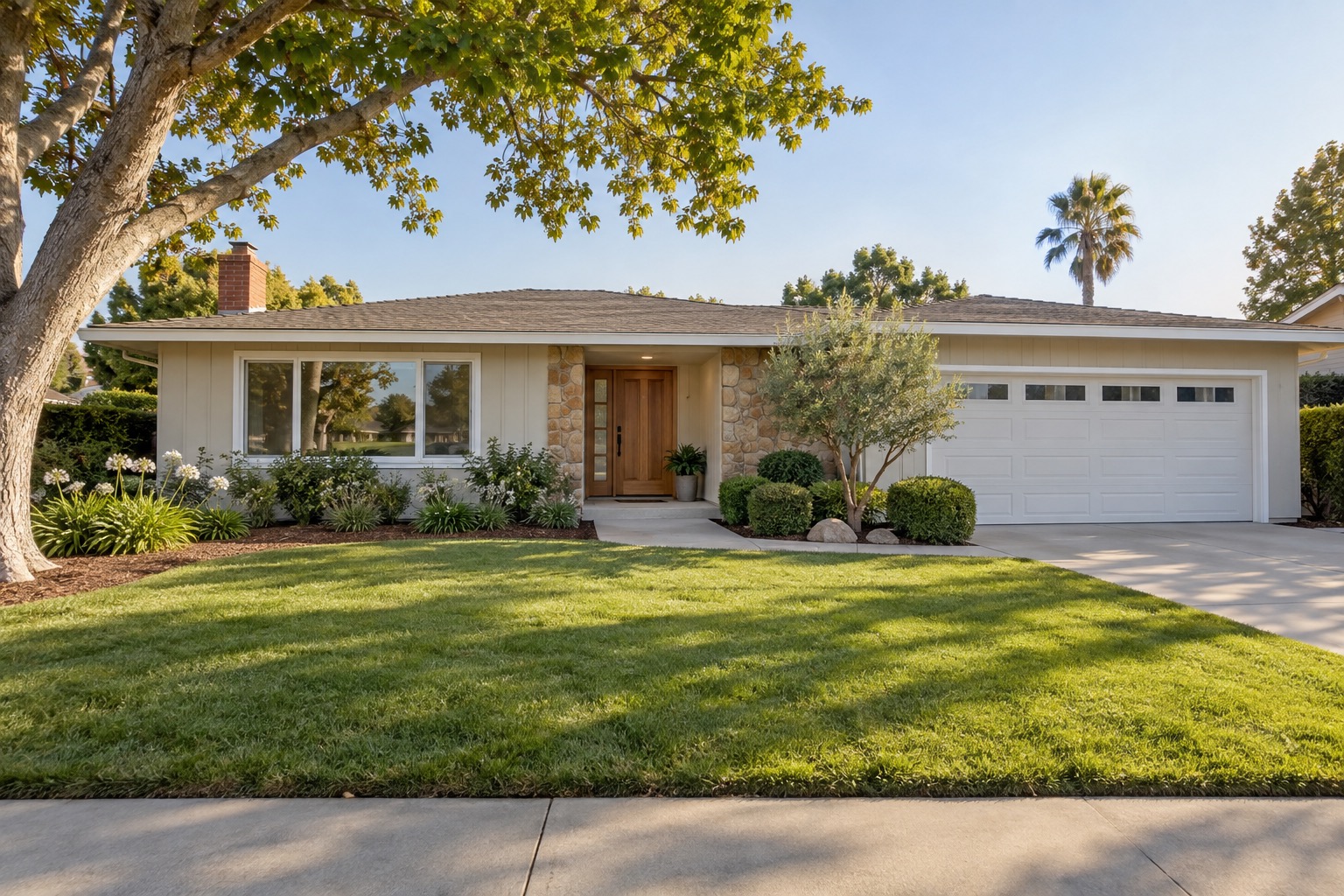
Compare that to the single-story tracts around Glassell, Cambridge, and Prospect in Central Orange, built mostly in the '50s through '70s on concrete slab foundations with zero-step entry and wider floor plans. For a lot of my clients, moving into one of those homes is a more realistic aging-in-place solution than trying to retrofit a historic property.
Position it as capital preservation, not loss — money spent on a historic retrofit rarely comes back at resale, where a move to accessible housing lets that equity keep working for you.
What Downsizing Actually Costs in Central Orange County
Budget for more than the moving truck. Senior move managers here typically run $3,500–$8,500, pre-sale cosmetic work $12,000–$35,000, and staging $3,500–$7,500. If you're carrying two homes during the transition, expect double-carrying costs — Orange County's median monthly mortgage payment on a comparably priced home runs around $9,250, which adds up fast if escrow drags.
On the sale side, median single-family prices in Orange sat between roughly $1,475,000 and $1,492,500 through mid-2026, with homes typically moving in 21 to 35 days when priced correctly. Overpricing based on peak expectations from a few years back is the fastest way to sit on the market longer than that.
What About Capital Gains?
If the home has appreciated significantly, capital gains exposure matters. Single filers can generally exclude up to $250,000 in gain, and married couples filing jointly up to $500,000, provided it's been your primary residence for at least two of the last five years. This is general information, not tax advice — your specific basis and exclusion eligibility should be confirmed with a CPA before you list.
Checking whether to sell before or after filing your Prop 19 claim and reviewing the senior downsizing checklist for Orange County are good next stops if you're ready to map out sequencing.
And if renovating before you list is even on the table for your situation, that's a separate conversation with different math — renovating versus selling as-is breaks down that trade-off specifically.
Real Results
A recent sale that captures this well: a historic home we sold in Old Towne Orange — the sellers chose to move rather than retrofit a home with foundation and access challenges, and it worked out well for them financially.

Frequently Asked Questions
Is there a "right age" to downsize in Orange County — 55, 65, or 75?
There's no single right age, but moving proactively between 55 and 65 generally gives you the most control — full mobility, time to shop for the right replacement home, and room to optimize a Prop 19 tax base transfer without deadline pressure.
Can I buy a more expensive replacement home and still use Prop 19?
Yes. Homeowners 55 and older can purchase a replacement home of greater value anywhere in California; the difference in market value is added to your transferred base year value rather than triggering a full reassessment.
What's the biggest risk of waiting until my 70s to downsize?
Waiting increases the chance a move becomes reactive — triggered by a fall or health event — which limits your housing options, compresses your timeline, and can force decisions under pressure instead of on your own terms.
If you're weighing this decision for yourself or a parent, I'm happy to walk through what your specific timeline and tax base would look like — reach out and we can talk it through. You can also call or text me anytime at (714) 681-1222.